The moment something goes wrong on a yacht is the worst possible moment to be improvising a claims process. A grounding at 2am, an engine room fire alarm, a guest injury during a tender transfer — in each case, what happens in the following hours determines whether the claim that follows is straightforward or contested.
This is not the general insurance primer. Our guide to yacht insurance covers policy structure, cruising areas, and what coverage to buy. This is the playbook for the moment a policy actually gets used — what to do, in what order, and why the same handful of mistakes keep costing owners money they were entitled to recover.
The First Hour: Safety, Then Evidence
Every claims process that goes well starts the same way, and it has nothing to do with insurance paperwork.
Safety first. Account for everyone on board. If there is fire, flooding, injury, or a risk of further damage, address that before anything else. No documentation step is worth delaying a safety response.
Stabilise, if it is safe to do so. Stopping the situation from getting worse — closing a valve, cutting power to a faulted circuit, deploying a fire extinguisher — is both the right operational response and, incidentally, the kind of action insurers expect a prudent owner to take. Most policies include an implied or explicit duty to mitigate loss.
Then, and only then, start building the record. As soon as the immediate danger has passed:
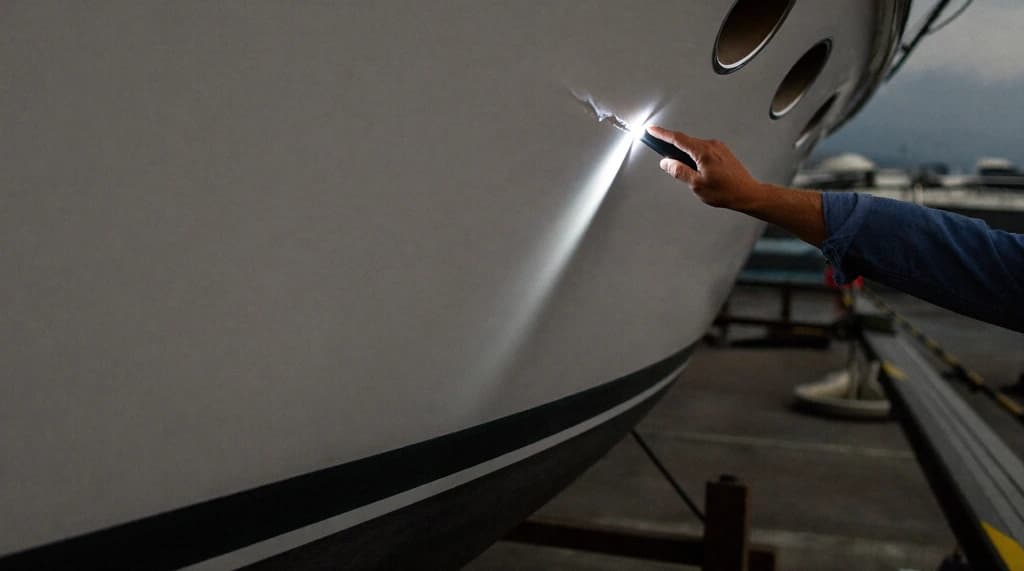
- Photograph everything — the damage itself, the surrounding area, weather and sea conditions, any equipment or fittings involved.
- Write a factual account of what happened while the sequence is still fresh. Time, position, sea state, who was where, what was done.
- Take contact details for anyone who witnessed the incident, including guests, crew from other vessels, or marina staff.
- Log the event in the ship's log with a timestamp. A logbook entry made at the time carries more weight than a reconstruction written days later.
Treat every incident, however minor, as if a claims adjuster will eventually read the file. A near-miss that causes no damage still deserves a logbook entry — if a related issue resurfaces later, that earlier record can materially help or hurt the claim.
Notification: The Step Owners Underestimate
Marine insurance policies place the burden of prompt notification on the insured. This is not a formality — it is one of the most common grounds insurers cite when disputing a claim.
Policy wording on notification timing varies. Some policies use language like "as soon as reasonably possible," others attach a specific number of days. Do not assume you have a comfortable window — read your policy's notification clause before the season starts, not after an incident happens. If you are not certain what your policy requires, ask your broker in writing and keep the answer on file.
What "notification" should look like in practice:
- A written notification — email, not just a phone call — sent to your broker and/or insurer as soon as the immediate safety response is complete.
- A brief, factual summary: what happened, when, where, who was involved, and what the suspected cause is. You do not need a full report at this stage — you need a timestamp showing you told them promptly.
- Confirmation of receipt from the insurer or broker, kept on file.
Late notification is one of the most frequently cited reasons insurers dispute yacht claims. It does not always void the claim outright, but it hands the insurer a basis to investigate whether the delay affected their ability to assess the loss — and that investigation itself can delay or reduce your settlement. When in doubt, notify immediately and clarify details afterward.
H&M or P&I? Get the Claim to the Right Desk
A meaningful share of claims friction comes from sending the right loss to the wrong cover — or not realising that a single incident may need to go to both.
Hull & Machinery (H&M) responds to physical loss or damage to the vessel itself: collision, grounding, fire, machinery breakdown, storm damage, theft of equipment. The claim process typically involves the insurer appointing a surveyor to assess cause and extent of damage, followed by a repair estimate and negotiation over cost and scope.
Protection & Indemnity (P&I) responds to the owner's legal liability to third parties: crew or guest injury, damage to another vessel or to marina infrastructure, pollution, and wreck removal. P&I claims typically move through a different track — often a P&I club rather than a commercial insurer — with investigation, third-party negotiation, and settlement handled separately from any hull repair.
Why this distinction matters operationally: a grounding can trigger both at once. The hull damage goes to your H&M insurer. If the grounding also damaged a protected seabed area, required a pollution response, or affected a nearby vessel, that liability exposure goes to your P&I cover — and needs its own, separate notification. Assuming one notification covers both is a documented cause of claims being underserved or delayed.
Building the Claim File
Once notification is in and a surveyor has been appointed (or the P&I club has opened an investigation), the strength of your position depends on the file you can produce.
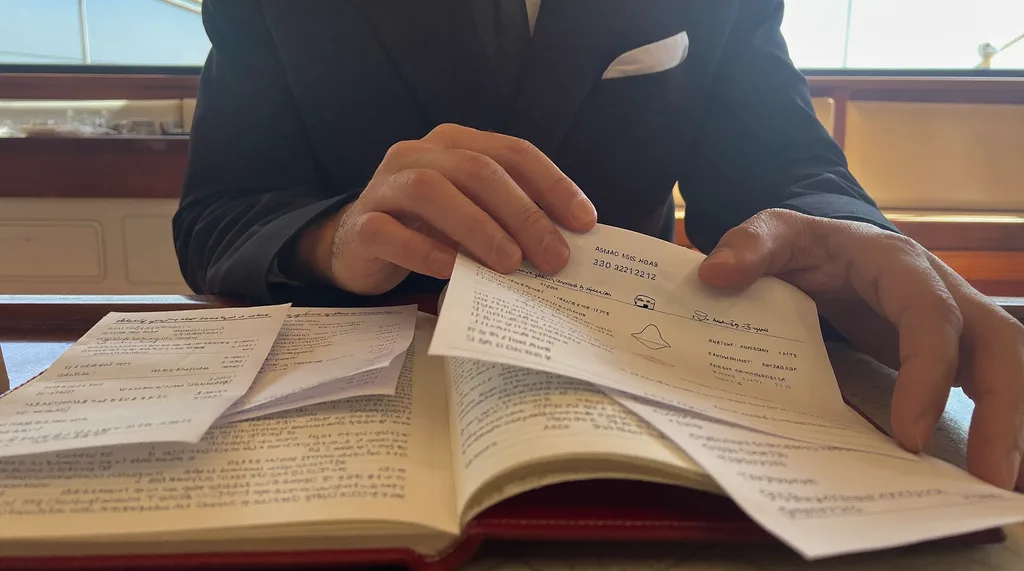
What a strong claim file typically includes:
- The incident report you wrote at the time, with photographs and logbook extract.
- Maintenance records for the systems or equipment involved — a service history that shows the vessel was maintained to a seaworthy standard before the loss, not just repaired after it.
- Crew certification records current as of the date of the incident — STCW certificates, endorsements, medical certificates.
- Survey and class records, if applicable, showing the vessel's condition was known and in order.
- Receipts for any emergency repairs or services engaged immediately after the incident.
Insurers and their surveyors are not assessing your word — they are assessing your records. A vessel with a documented maintenance history, current crew certification, and a clear incident report presents a materially stronger claim than one where the surveyor has to take the owner's account on trust. This is precisely the operational discipline covered in our maintenance log guide — the same records that support insurance underwriting also support claims.
Do not authorise permanent repairs before the insurer's surveyor has assessed the damage, unless emergency temporary repairs are needed to prevent further loss. Most policies require consent for repairs above a threshold, and repairing before assessment can complicate — or void — the claim.
Why Claims Actually Get Rejected
Outright fraud is rare and not the subject of this guide. The patterns that actually cause disputes and rejections are almost always process failures on an otherwise legitimate loss:
Late notification. Covered above — one of the most frequently cited issues.
Maintenance record gaps. A surveyor who cannot confirm the vessel was properly maintained before the loss has grounds to question whether the loss was caused, or worsened, by neglect rather than an insured peril.
Lapsed crew certification. P&I policies typically carry a warranty that the vessel will be operated with crew meeting flag state and STCW requirements. If a relevant certificate had expired at the time of the incident, the insurer may treat that as a breach of warranty and decline to respond.
Wrong cover. Submitting a hull loss to a P&I club, or a liability claim to the hull insurer, wastes time the claim doesn't have and can create the appearance of a poorly managed claim even when the underlying loss is valid.
Operating outside the policy's defined area. If the incident happened outside the cruising area on the policy, coverage may not apply regardless of how well the rest of the claim is documented.
Undisclosed material facts. Anything material that changed since the policy was written — a change of use, a modification, a previous unreported incident — and was not disclosed can give the insurer grounds to dispute the claim entirely.
Of these, certification lapses and maintenance record gaps are the two most preventable through day-to-day operational systems — and the two most likely to surface only after it is too late to fix them. A crew certificate that quietly expired three months before an unrelated incident can still complicate a claim that has nothing to do with the certificate itself.
After the Surveyor's Report
Once the insurer's surveyor has assessed the damage, the process moves into negotiation: repair scope and cost for H&M claims, or liability and settlement value for P&I claims. A few practical points:
- You are entitled to request a copy of the surveyor's report and to raise disagreements with specific findings, supported by your own documentation.
- For larger or contested claims, an independent surveyor or average adjuster engaged on the owner's behalf can materially change the outcome — whether their cost is recoverable depends on the policy wording, so confirm with your broker first.
- Keep every piece of correspondence. Claims that drag on benefit from a clean paper trail more than almost anything else.
Frequently Asked Questions
The Claim Is Only as Strong as the Operation Behind It
A claims playbook is really an operations playbook wearing an insurance hat. The owners and captains who get through incidents with the fewest disputes are not the ones with the best insurance broker — they are the ones whose maintenance logs, crew certification records, and voyage logs were already in order before anything went wrong.
That is the part that can be built in advance. HelmOps supports it directly: maintenance logging with dated entries and receipt attachment, crew certification tracking with expiry alerts so lapses never happen silently, and digital voyage records that produce exactly the timestamped account a claim needs.
Start your 30-day free trial — no credit card required.
Sources: Lexology, "P&I Insurance Coverage: How to Handle Common Disputes Over It"; Marsh, "How P&I clubs deal with discretionary claims and disputes"; Amwins, "Marine Protection & Indemnity Insurance — Overview and Coverage Concerns." Policy terms vary significantly between insurers — always confirm your specific notification period, cruising area, and warranty conditions directly with your broker or insurer.