Insurance is the part of yacht ownership that nobody thinks about until they need it. Then it becomes the only thing that matters.
A hull claim rejected because the vessel was 40 miles outside the defined cruising area. A P&I liability case where the crew member's STCW certificate had expired three months earlier. A charter season cancelled because the policy didn't include a charter use endorsement. These are not verified examples of specific claim files; they are the kinds of risk that come from not reading a policy's limits.
None of these are obscure scenarios. They can happen to experienced owners, with competent captains, on well-maintained vessels. The common thread is not negligence. It is the gap between having insurance and understanding what it actually covers.
This guide closes that gap.
The Two Policies Every Yacht Needs
Marine insurance for private and charter yachts is built on two distinct covers. They are not interchangeable, and neither is optional for a professionally operated vessel.
Hull and Machinery (H&M)
Hull and machinery insurance covers defined physical loss or damage to the vessel. The insured value is agreed at inception; compare it with a current valuation and read the basis-of-settlement clause rather than assuming replacement cost.
Hull premiums depend on vessel type, age, construction, crew qualifications, operating area, use, survey findings, and claims history. Use current broker quotes for the specific risk rather than a market percentage.
Protection & Indemnity (P&I)
P&I insurance covers the owner's legal liability to third parties. This is the cover that matters when something goes wrong with consequences beyond the vessel itself.
P&I liability exposure includes: injury or death of crew, injury to passengers or guests, damage to another vessel or harbour infrastructure, pollution from fuel or waste, and wreck removal. These claims can be large — wreck removal alone can be a major cost, particularly in a busy marina.
Standard hull policies do not cover P&I liabilities. Both covers are required.
For charter operations, P&I insurance must explicitly cover passenger liability. Standard P&I policies may exclude commercial operations or passengers carried for reward. Read the policy wording, not just the summary — and confirm with your broker before the first charter of the season.
Charter Use: The Endorsement That Cannot Be Assumed
A common insurance mistake in the Mediterranean charter market is operating commercially without the appropriate policy endorsement.
A standard private pleasure craft policy — the most common type held by individual yacht owners — is written on the assumption that the vessel is used for personal recreational purposes. The moment a charter fee is received, the use changes. The policy may not.
What a charter use endorsement covers:
- Commercial hire of the vessel to paying guests
- Passenger liability within the P&I cover
- Third-party liability arising from charter operations
What it affects:
- Premium and deductible impact of charter use
- Crew requirements (many charter endorsements specify minimum crew qualifications)
- Vessel condition warranties (charter use may require more frequent surveys)
The endorsement must be in place before the first charter of the season — not applied for when a problem arises. Retroactive endorsements do not exist in meaningful form.
Crew Insurance and Certification: The Insurance Connection
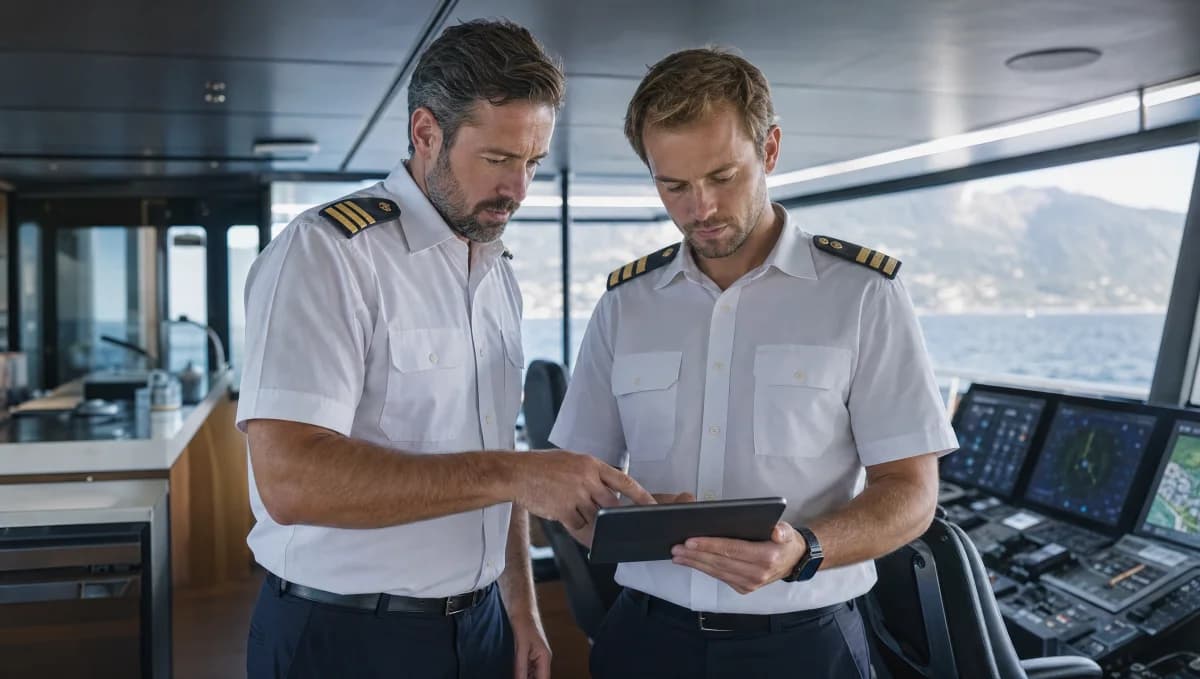
There is a direct operational link between crew documentation and insurance validity that is frequently underappreciated.
P&I policies typically include a warranty that the vessel will be operated with qualified crew meeting the applicable requirements of the flag state and the STCW Convention. If a crew member's STCW certificate has expired, this warranty is breached. In the event of a crew-related incident, the insurer may decline to respond on the grounds of warranty breach.
This is not theoretical. P&I claims involving crew injury or illness regularly trigger review of crew certification status at the time of the incident. If documentation was not current, coverage can be disputed.
The owner's liability in a crew incident does not disappear if insurance declines. The owner remains liable. The insurance that was supposed to manage that liability is simply absent. This is the operational and financial significance of crew certification tracking — it is not only a compliance matter, it is an insurance matter.
The practical implication: a system that tracks crew certification expiry dates and alerts before lapse is not only operationally valuable — it is a material protection for the owner's insurance position.
Cruising Area: The Boundary That Matters
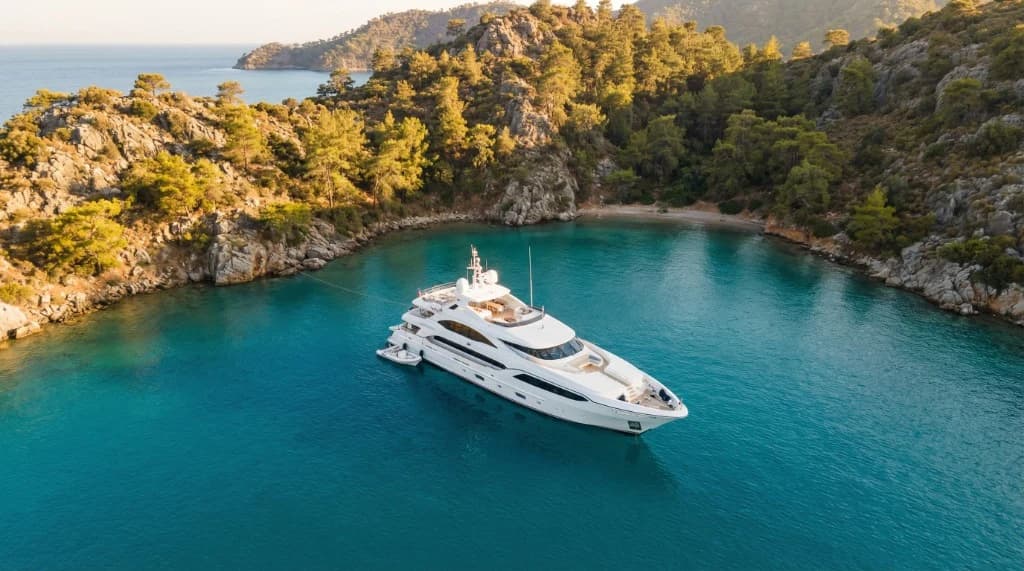
Every yacht insurance policy defines a geographic operating area. This is the area within which coverage applies. Outside it, the vessel is uninsured — for both hull damage and P&I liability.
Standard Mediterranean cruising area definitions vary by insurer but typically cover combinations of:
- The Mediterranean Sea and connected seas (Adriatic, Aegean, Black Sea)
- Atlantic coastal waters within defined latitude limits
- Specific national territorial water exclusions or inclusions
For vessels operating between Turkey, Greece, Croatia, and the Western Mediterranean, the cruising area definition must be checked carefully. A policy written for "Turkish waters" does not automatically extend to Greek or Croatian territorial waters. A season that includes a passage to the Ionian from the Turkish Aegean requires the policy to cover both areas.
Common cruising area mistakes:
- Assuming "Mediterranean" means the entire sea — some policies have sub-regional limitations
- Summer passages to Atlantic islands (Azores, Canaries) outside the standard Mediterranean area
- Black Sea passages not included in a policy defined for the Mediterranean only
- Operating in Turkish waters under a European policy that excludes Turkey
Clarify the cruising area in writing with your broker before season planning. If the planned itinerary extends beyond current policy limits, arrange the extension before departure — not after an incident.
The Turkish Insurance Market
For vessels based in or regularly operating in Turkish waters, the domestic insurance market offers options with specific advantages for Turkey-based operations.
Türk P&I Sigorta is Turkey's first domestic P&I insurer. For vessels spending significant time in Turkish waters, a domestic P&I provider with local expertise, Turkish-language claims handling, and relationships with Turkish maritime authorities offers operational advantages that European alternatives do not.
Hull insurance in Turkey is offered by a range of domestic insurers. When comparing them with European markets, look beyond the premium: survey response times, documentation requirements, and adjuster familiarity with the local operating environment.
For European vessels spending extended seasons in Turkish waters, a hybrid approach is one option: European H&M insurance with territorial extension to Turkey, combined with Türk P&I Sigorta for local P&I coverage. This is worth discussing with a broker who operates in both markets.
Survey Requirements and Vessel Condition
Marine insurers require periodic surveys to confirm the vessel's condition and value. Survey requirements vary by policy, but standard practice includes:
Initial survey: Required at policy inception for vessels above a certain age or value. The survey establishes insured value and may identify conditions that require remediation before coverage is bound.
Periodic surveys: Each policy sets its own interval for condition surveys — confirm it with your broker rather than assuming a standard cycle. For vessels maintaining class, classification societies — Bureau Veritas, Lloyd's Register, DNV — run their own survey cycle: annual surveys and a class renewal (special) survey every five years.
Post-incident surveys: Required after any damage claim. The insurer appoints a surveyor to assess the damage, confirm cause, and establish repair cost. The captain's documentation of the incident — written account, photographs, logbook entries — directly influences the survey outcome.
A vessel that has been consistently maintained, with maintenance records that support that history, presents a materially stronger claim than one with gaps in the record. Digital maintenance logs with timestamps and attached receipts are practical evidence, not just administrative practice.
Incident Response: What to Do When Something Goes Wrong
How an incident is handled in the first 24 hours has a disproportionate effect on the claim outcome. The sequence:
Immediate priorities (in order): Crew and guest safety. Prevent further damage if safely possible. Photograph everything — vessel condition, cause of damage, scene, weather conditions. Note the time, position, and sea state in the logbook.
Notification: Contact your insurer or P&I club within the timeframe specified in your policy. Wording varies — from "immediately" or "promptly" to a fixed number of days — so check yours before the season. Late notification does not automatically void a claim, but it creates a basis for the insurer to investigate whether the delay affected their interests.
Documentation: Written account of events while memory is fresh. Witness statements if third parties were involved. Keep all receipts for any emergency repairs or services engaged. Do not authorise permanent repairs without insurer approval — most policies require consent for repairs above a threshold.
P&I incidents: If a third party is involved — crew injury, guest incident, collision with another vessel — contact the P&I club before making any admissions of liability or agreeing any settlements. The P&I club's role is to manage the liability; premature admissions can complicate their position.
A digital logbook with timestamped, position-tagged entries is not just operationally useful — it is contemporaneous evidence. An entry made during an incident carries more weight than a reconstruction written afterwards. Treat the logbook as if every entry might one day be read by a claims adjuster.
What Voids Coverage: The Operational Checklist
Most voidance scenarios are preventable. The common categories:
Geographic: Operating outside the policy's cruising area without extension in place.
Use: Charter or commercial hire without endorsement.
Crew: Operating with crew whose certifications have lapsed, or without the minimum crew qualifications specified in the policy.
Condition: Failing to maintain the vessel in seaworthy condition; known defects not remediated before sailing.
Disclosure: Material facts not disclosed at inception — previous incidents, vessel modifications, change of principal use.
Behaviour: Operating under the influence; gross negligence.
Of these, the crew certification and use category voidances are the most preventable through operational systems. Geographic and condition voidances require planning discipline. Disclosure failures at inception are avoidable with a thorough broker conversation.
Frequently Asked Questions
Insurance Is Only as Good as the Operation Behind It
Marine insurance transfers financial risk. It does not eliminate operational risk. A policy cannot prevent an incident, compensate for a detained vessel's lost charter revenue, or restore a relationship with an owner after a preventable claim.
The owners and captains who experience the fewest insurance problems share a consistent characteristic: systematic operational management. Maintenance records that support vessel condition. Crew documentation that stays current. Logbooks that document passages contemporaneously. Cruising areas confirmed before seasons begin.
These are not insurance practices. They are operational practices that happen to produce good insurance outcomes.
HelmOps supports each of these areas: maintenance logging with receipt attachment, crew certification tracking with expiry alerts, digital voyage records, and owner reporting that creates the documentation trail behind a professionally managed yacht. Start your 30-day trial — no credit card required.
What changed (7 Sep 2026): Removed or marked unsupported numeric claims and replaced them with sourceable, vessel-specific guidance.