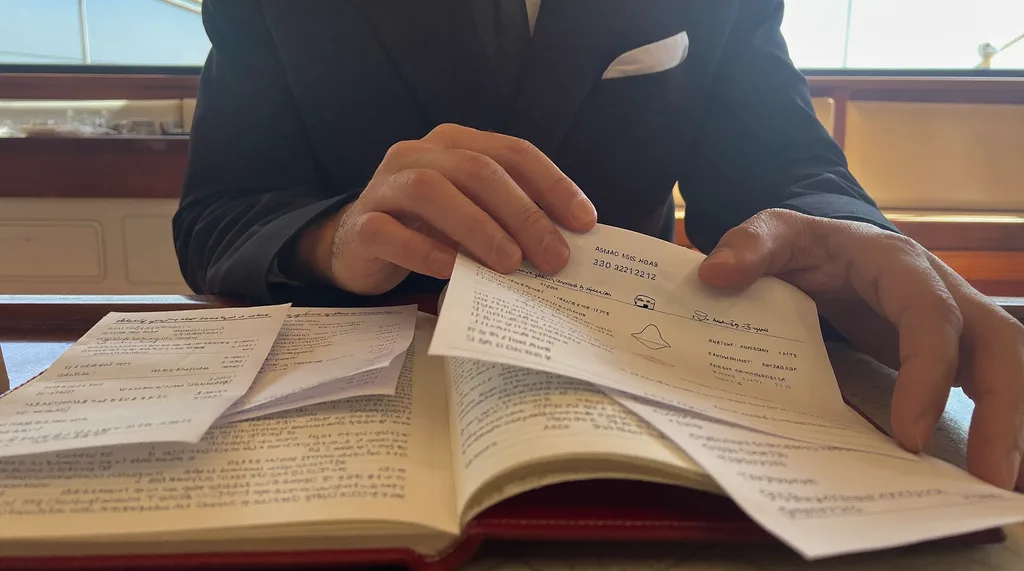
Every captain has heard a maintenance story that starts with "I thought we just serviced that." The useful lesson is not an unverifiable anecdote or repair bill: if the service interval, completion evidence, and next due point are not in a shared record, the crew cannot rely on the schedule.
A proper maintenance log isn't bureaucracy. It's the difference between catching a failing seal at the marina and diagnosing it offshore at 2am.
What Makes a Maintenance Log Actually Useful
Most "yacht maintenance templates" online are either too simple (just a date and "oil change") or so complex that nobody fills them out consistently. The sweet spot is a template that captures what matters without requiring 20 minutes per entry.
The six fields that actually matter:
- Date — obvious, but also record engine hours (for interval-based tasks)
- System/Equipment — specific: "Port Volvo D6-400 (hull #VLX12345)" not "engine"
- Work performed — verb + what + result: "Replaced raw water impeller (old impeller showed 3 cracked vanes)"
- Parts used — model, part number, source. You will need this for warranty claims.
- Who did the work — captain, owner, yard name, technician name
- Next service due — date or engine hours, whichever comes first
That's it. Everything else is optional. For the hour-based intervals themselves, our marine engine service schedules group common MTU, MAN, Caterpillar, Volvo Penta, Yanmar and Cummins models into 250, 500, 1000 and 2000-hour planning checklists.
Build the Template: Structure and a Free Checklist
The six fields above are the whole template. Put them across the top of a Google Sheet or Excel file, one row per service event, and you have a working maintenance log in about ten minutes. There is nothing to download and no email to hand over.
What most captains get wrong is not the columns — it is knowing which items belong on the schedule in the first place. That part we do publish:
→ Free Yacht Maintenance Checklist — an interactive checklist covering safety equipment, hull and deck, main engines, generators, electrical, navigation, rigging, and compliance documentation, with the service frequency on each item and the regulatory reference (SOLAS, ISM, MLC 2006, MARPOL) where one applies. Filter by category, tick off what is current, and print or save the result as a PDF for the vessel's records.
Alongside the log sheet, four more tabs are worth setting up in the same file:
- Schedule — upcoming services with due dates highlighted
- Equipment Registry — your vessel's systems with warranty dates
- Annual Summary — total spend by category for owner reports
- Crew — who is authorized to perform which tasks
Organizing by System, Not by Date
The most common mistake: logging everything chronologically. When you need to answer "when was the generator last serviced?" you're scrolling through 200 rows.
Better structure: group by system, sort by date within each group.
Primary systems to track separately:
| System | Key Intervals |
|---|---|
| Main engines | Oil: every 250h / Annual; Impeller: every season; Zincs: quarterly |
| Generator | Oil: every 200h; Filters: annually |
| Fuel system | Filters: annually or when suspect; Tank inspection: every 5 years |
| Electrical | Battery banks: test every 6mo; Shore power: annually |
| Safety equipment | Fire extinguishers: annually; EPIRB: per manufacturer; Liferaft: per manufacturer (SOLAS rafts: every 12 months) |
| Rigging (sail) | Standing rig: every 5 years or after hard sailing; Running rig: visually each season |
| Hull & deck | Antifouling: annually; Osmosis inspection: every 3-5 years |
The Photograph Habit
Photos are underrated in maintenance logs. Before/after photos of replaced parts answer questions that text can't:
- Proving to the owner that the impeller was genuinely worn (not replaced unnecessarily)
- Showing a yard what "the corrosion around the stern gland" looks like without a haul-out
- Documenting the exact condition of an item when a warranty claim starts
If you use a spreadsheet, add a column for "Photo reference" and keep a dated folder in cloud storage. If you use a digital log, most platforms let you attach photos directly to entries.
What ISM Requires (For Commercial Vessels)
Commercial yachts of 500 GT and above must comply with the ISM Code, and under the REG Yacht Code smaller commercial yachts need a safety management system with a documented inspection and maintenance programme. In practice that means a Planned Maintenance System (PMS). This is more structured than a basic log:
- Documented maintenance schedules for all critical equipment
- Records of completed maintenance with signatures
- Evidence that overdue items are tracked and escalated
- Drill records, emergency equipment checks, and near-miss reporting
A spreadsheet can technically meet ISM requirements if it's thorough and consistently used. In practice, what PSC inspectors need to see is a clearly organized, complete record.
If your vessel operates commercially and calls at ports of Paris MOU member states other than its flag state, PSC inspectors can and do request maintenance records during port calls. Incomplete records result in deficiencies; missing records can trigger detention.
When a Spreadsheet Isn't Enough
Spreadsheets break down in four situations:
1. Multiple vessels. Cross-referencing service records across three boats in one spreadsheet is manageable. Across eight boats it becomes a full-time job.
2. Remote ownership. When an owner is in London and the vessel is in Montenegro, emailing updated spreadsheets weekly is friction. Real-time access changes the conversation.
3. Charter operations. Charter logs need to distinguish guest damage from normal wear. Spreadsheets can do this, but not elegantly.
4. Regulatory reporting. Exporting a clean maintenance report from a spreadsheet to satisfy port authority requests takes hours. Dedicated software exports in minutes.
If any of these apply, software is worth evaluating. For vessels based in Turkey or the Mediterranean, HelmOps is built specifically for this — maintenance logs by engine hours, expense tracking, crew documents, and owner reports in one place, with offline support for maintenance logs and expenses at marinas with poor connectivity.
Building the Habit
The best maintenance log is the one that actually gets filled out. A few practices from captains who've maintained consistent records for years:
Same-day rule. Log service events the same day they happen. Two days later, you've forgotten the part number.
Designated time. Friday afternoon, end of each voyage, or whenever you refuel — pick a ritual and attach logging to it.
No minimum entry size. A one-line entry is infinitely better than no entry. "2026-05-15: Checked all through-hulls, no leaks. 2,847 engine hours." is complete.
Share it. When an owner has read access to the log, they stop asking "when was the engine last serviced?" — and they trust you more.
The yacht maintenance log doesn't need to be complex. It needs to be consistent. Whatever format you choose — this template, another tool, or dedicated software — the goal is the same: when something fails, you know exactly what was done, when, by whom, and what to do next.
What changed (7 Sep 2026): Replaced the fake download with the real checklist tool and removed an unverifiable failure-cost anecdote.