A captain managing a single 45-metre yacht is, in practice, tracking somewhere between five and eight statutory certificates at once, and no two of them run on the same clock. One needs a survey every year. Another needs nothing between its issue date and a single visit somewhere in year two or three. A third never needs a periodic survey at all. Miss the window on any of them and the exposure isn't abstract — it's a Port State Control detention, a charter cancelled mid-season, or an insurer questioning coverage after the fact.
The confusion isn't really about the certificates. It's that captains and fleet managers are usually taught each certificate in isolation — "the ISM cycle," "the load line renewal," "the MLC inspection" — without ever seeing that they fall into three distinct survey patterns. Once those patterns are visible, the whole calendar stops looking arbitrary. Add a fleet of two or three vessels, each on a different certificate issue date because they were built, sold, or re-flagged years apart, and the arbitrary-looking calendar becomes a genuine operational risk rather than a paperwork inconvenience.
Source: IMO International Convention on Load Lines, 1966/1988 Protocol; ISM Code (SOLAS Chapter IX) Section 13; ISPS Code Part A Section 19; SOLAS Chapter IV, Regulation 1 (as replaced by IMO Resolution MSC.496(105)); Maritime Labour Convention, 2006 (ILO), Standard A5.1.3; International Convention on Tonnage Measurement of Ships, 1969. Applicability thresholds vary by vessel type, flag state, and commercial status — confirm with your flag administration.
Why the Certificate Calendar Looks Like Chaos Until You See the Pattern
Every one of these certificates traces back to a different international instrument — the Load Line Convention, SOLAS, the ISM Code, the ISPS Code and the Tonnage Convention from the IMO, and MLC 2006 from the ILO — each negotiated and amended on its own timeline over five decades. There was never a single committee designing one coherent survey calendar for a yacht. What exists today is the result of the IMO's Harmonized System of Survey and Certification (HSSC), which aligned the five-year validity period across most of these certificates but did not standardize what happens inside that five-year period.
That's the part that trips people up. "Five-year certificate" sounds like it should mean the same thing every time. It doesn't.
A Port State Control officer doesn't care why a certificate lapsed — an overdue annual survey and an overdue intermediate verification are treated the same way: as a deficiency, and in serious cases, grounds for detention. Our Port State Control guide breaks down exactly which certificate gaps PSC inspectors flag most often.
The Certificates Every Commercially Operated Yacht Carries
Not every yacht carries every certificate below — applicability depends on gross tonnage, length, and whether the vessel operates commercially. But for a charter yacht or any vessel over roughly 500 GT on international voyages, most of this list applies.
Load Line Certificate — Issued under the International Convention on Load Lines, 1966, as amended by the 1988 Protocol. Applies to ships of 24 metres and over in length on international voyages (pleasure yachts not engaged in trade are exempt, though many carry one anyway for class and insurance purposes). Confirms the vessel's assigned freeboard and load line marks.
Safety Equipment Certificate — A SOLAS certificate confirming lifesaving appliances, fire safety systems, and navigation equipment meet the required standard. Generally applies to cargo ships (a category that includes most yachts, for SOLAS purposes) of 500 GT and over on international voyages.
Safety Radio Certificate — A separate SOLAS certificate covering GMDSS radio communication equipment. Required under SOLAS Chapter IV for cargo ships of 300 GT and over on international voyages — a lower threshold than the Safety Equipment Certificate.
ISM Document of Compliance (DOC) — Issued to the management company, not the vessel, confirming the company's Safety Management System meets ISM Code requirements. Mandatory for commercial vessels over 500 GT and charter yachts carrying more than 12 passengers. Our ISM Code compliance guide covers how to build the underlying Safety Management System from scratch.
ISM Safety Management Certificate (SMC) — Issued to the ship, confirming the company's SMS is being effectively implemented on board. Follows the DOC once the company holds one.
ISPS International Ship Security Certificate (ISSC) — Confirms the vessel's Ship Security Plan and associated security equipment meet ISPS Code requirements. Applies to passenger ships of any size and cargo ships of 500 GT and over on international voyages.
International Tonnage Certificate — Establishes the vessel's gross and net tonnage under the 1969 Tonnage Convention. Unlike everything else on this list, it doesn't expire and isn't subject to periodic survey.
MLC Maritime Labour Certificate — Confirms compliance with the Maritime Labour Convention, 2006 on crew living and working conditions. Mandatory for commercially operated ships of 500 GT and over on international voyages.
Who Actually Carries Out These Surveys
None of these certificates are issued by the IMO directly — the IMO writes the conventions, but enforcement sits with each vessel's flag state. In practice, most flag administrations delegate the actual survey and certification work to a Recognized Organization, almost always a classification society such as Lloyd's Register, DNV, ABS, Bureau Veritas, or RINA, acting under a formal delegation agreement. The certificate is still issued in the flag state's name (or by the Recognized Organization under delegated authority, depending on the flag), and the flag administration remains ultimately responsible for the vessel's compliance regardless of who physically attended the survey.
This matters for scheduling because it means the same surveyor visit can often cover multiple certificates at once, if the timing lines up. A Recognized Organization surveyor attending for an annual Load Line survey can frequently combine that visit with the Safety Equipment and Safety Radio annual surveys, since all three share the same anniversary-date logic — but they cannot combine it with an ISM SMC intermediate verification unless that certificate's own window happens to fall in the same year. Confirming exactly which surveys your flag state and class society will combine on a single visit, and which require separate attendance, is worth doing well before the survey window opens rather than assuming it will simply work out.
Three Survey Patterns Govern Almost Everything
Strip away the convention-specific language and these certificates sort into three groups by what happens between issue and renewal.
Group 1 — annual survey required. Load Line, the Safety Equipment Certificate, the Safety Radio Certificate, and the ISM DOC all require a survey or verification at (or within three months of) every anniversary date of the certificate — meaning up to four checkpoints across the five-year cycle before the renewal survey itself.
Group 2 — single intermediate survey required. The ISM SMC, the ISPS ISSC, and the MLC certificate require exactly one intermediate survey, and it must fall between the second and third anniversary date of the certificate. No annual surveys are required in the years before or after that window.
Group 3 — no periodic survey. The International Tonnage Certificate stands alone. It's issued once, after an initial survey, and remains valid indefinitely unless the vessel's tonnage, configuration, or flag changes — no annual check, no intermediate visit, no five-year renewal.
| Certificate | Issued to | Validity | Annual survey | Intermediate survey | Renewal survey |
|---|---|---|---|---|---|
| Load Line Certificate | Vessel | Up to 5 yrs | Yes, within ±3 mo of each anniversary | No | By 5th anniversary |
| Safety Equipment Certificate | Vessel | Up to 5 yrs | Yes, within ±3 mo of each anniversary | No | By 5th anniversary |
| Safety Radio Certificate | Vessel | Up to 5 yrs | Yes, within ±3 mo of each anniversary | No | By 5th anniversary |
| ISM DOC | Company | Up to 5 yrs | Yes, within ±3 mo of each anniversary | No | By 5th anniversary |
| ISM SMC | Vessel | Up to 5 yrs | No | Yes, between 2nd and 3rd anniversary | By 5th anniversary |
| ISPS ISSC | Vessel | Up to 5 yrs | No | Yes, between 2nd and 3rd anniversary | By 5th anniversary |
| MLC Certificate | Vessel | Up to 5 yrs | No | Yes, between 2nd and 3rd anniversary | By 5th anniversary |
| International Tonnage Certificate | Vessel | No expiry | No | No | None, unless tonnage/config changes |
The three "annual" certificates — Load Line, Safety Equipment, and Safety Radio — share the same anniversary-date logic, so if your vessel's statutory surveys are already synchronized to a single date, all three can typically be surveyed in the same visit. The three "intermediate" certificates don't share a survey with each other automatically just because they fall in the same year-two-to-three window — each needs its own verification scheduled, even if a single attending surveyor or Recognized Organization handles all three on the same trip.
Building a Calendar That Doesn't Rely on Memory
The practical failure mode isn't ignorance of these rules — most captains know them. It's that a five-year cycle with four different checkpoint types is genuinely hard to hold in working memory alongside trip planning, crew changes, and maintenance, especially across a fleet of more than one vessel.
What tends to work in practice is treating certificate tracking the same way a planned maintenance system treats a service interval: one record per certificate, one next-due date computed from the anniversary date and survey type, and a reminder buffer set well ahead of the actual window — not on it. Waiting until the annual survey window opens to book a surveyor, particularly during a busy charter season when Recognized Organization surveyors are booked out weeks in advance, is a common and avoidable source of last-minute scrambling.
Take a vessel with an ISM SMC issued on 1 March 2024. The intermediate verification window doesn't open until 1 March 2026 and closes 1 March 2027 — the second and third anniversary dates. A calendar that only flags the certificate's printed five-year expiry (1 March 2029) will sit silent for two full years and then miss the one window that actually mattered, because nothing on the certificate itself announces that an intermediate visit was ever due. The certificates in the annual-survey group are more forgiving in one sense — they surface a reminder every year — but across a fleet with staggered anniversary dates, that just means more individual dates to track rather than fewer.
Where Survey Timing Meets the Yard
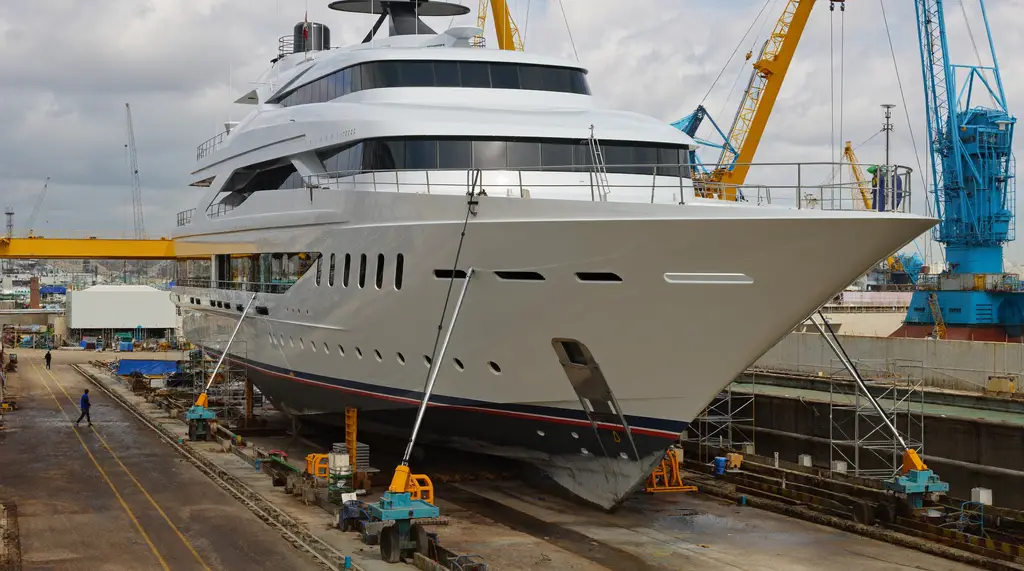
A yacht's statutory certificate calendar and its classification society survey calendar are separate systems, but they frequently need to intersect. Class societies run their own five-year special survey cycle, typically requiring a dry-docking or an approved in-water equivalent, alongside their own annual and intermediate surveys. Several of the statutory surveys above — particularly hull, safety equipment, and machinery-related checks — benefit from the same out-of-water access a class special survey requires.
Planning a refit or dry-dock period to land near an annual or intermediate statutory survey window, rather than treating every certificate deadline as an isolated event, avoids duplicated yard visits and surveyor mobilization costs. Our guide to managing a superyacht refit and dry-dock period covers how to plan shipyard timing around class survey cycles in more detail — the same synchronization logic applies to statutory certificate renewals that happen to fall in the same window.
Bringing It Together
The certificate list itself isn't the hard part — most captains can recite it. What causes missed deadlines is treating a five-year validity period as a single distant date instead of a sequence of distinct checkpoints, each with its own rule: annual for some, one intermediate visit for others, nothing at all for tonnage. Knowing which group each certificate falls into, and building a calendar around that difference rather than a single renewal date, is what keeps a Port State Control inspection from turning into a detention and keeps a busy charter season from colliding with a missed survey window.