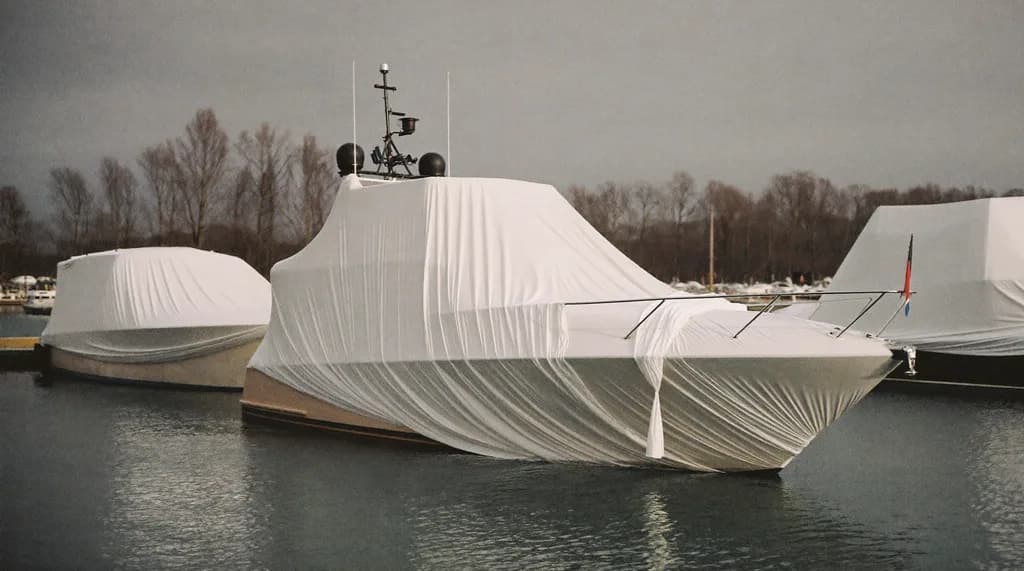
A refit period is the one phase of yacht ownership where almost everything that normally stays hidden — behind panels, under the waterline, inside machinery spaces — becomes visible at once. That visibility is the point of a refit. It is also where budgets, timelines, and owner expectations most commonly diverge from what actually happens.
This guide treats a refit as what it is, a project, and walks through yacht refit project management step by step: how far ahead to book, how to write and lock a specification that protects the budget, how to fit class survey timing into the schedule, how to staff the yard period, and how to keep scope, cost and progress under control once the vessel is on the blocks.
Source: ONBOARD Magazine, refit shipyard reporting; KRM Yacht, Superyacht Refit Planning Guide; Hill Robinson, Choosing the Right Shipyard for Your Superyacht Refit; classification society survey cycle requirements (Lloyd's Register, DNV, ABS, RINA). Budget overrun figures cited in this guide reflect commonly discussed industry experience, not a single audited statistic — treat as directional.
Step 1: Book the Yard Early, Because Refit Planning Starts Sooner Than Owners Expect
The single most common mistake in first-time refit planning is starting the shipyard conversation too late. Availability is specific to the vessel, scope, yard capability, and drydock window, so request current slot options directly instead of relying on a fleet-growth statistic.
If your refit needs to land in a specific window — ahead of a charter season, ahead of a class survey deadline, or ahead of an owner's planned use of the vessel — start the shipyard conversation as soon as the scope and target window are known, and get a current written slot indication from each candidate yard. Waiting until "closer to the time" in a tightening capacity market means choosing from whatever slots remain, not the yard best suited to your project.
Step 2: Write and Lock a Specification That Protects the Budget
Budget overrun is the most consistently discussed risk in refit project management, and the root cause cited across the industry is almost always the same: an incomplete initial scope of work, discovered too late.
Why this happens: some yards quote competitively against a narrow scope to win the contract — a practice openly discussed within the refit sector — then the fuller scope emerges once the vessel is committed, budget and duration escalating from there. This isn't always adversarial; genuine hidden damage under old coatings, behind bulkheads, or inside machinery spaces is routinely found only once the vessel is on the blocks and areas are opened up. But the owners who fare best are the ones who scoped for that possibility rather than being surprised by it.
A specification that protects against overrun should include:
- A pre-refit condition survey — an independent assessment identifying known defects, areas of concern, and likely hidden-damage zones before any yard quotes the work
- A system-by-system scope of work — hull and coatings, machinery, electrical, HVAC, interior, exterior, AV/IT, each broken down in enough detail that competing yards are quoting against the same defined work, not their own interpretation of a vague brief
- Explicit class and flag state survey requirements to be satisfied during the yard period, so survey work isn't discovered as an unplanned addition once the surveyor is on site
- A realistic contingency allowance — sized to the vessel's age, survey findings, maintenance history, access limitations, and known problem areas rather than a generic percentage
- A clear division of responsibility between owner-supplied equipment, yard-supplied materials, and third-party subcontractors, so scope and cost ownership for each line item is unambiguous before work starts
Lock in the complete scope of work before the shipyard period starts, and make sure the yard is quoting against that locked scope — not a preliminary estimate that both sides silently understand will grow. A yard with a strong track record on vessels of comparable size and complexity, and a project manager who has personally run a comparable scope before, is a more reliable predictor of budget discipline than the lowest initial quote.
Step 3: Align the Project Schedule with the Class Survey Cycle
Classification societies operate a structured five-year survey cycle for vessels under class: annual surveys, an intermediate survey around the midpoint, and a special survey at the five-year mark — the special survey typically requiring drydocking or an approved equivalent in-water survey, alongside thickness measurements, machinery checks, and a full systems review.
This creates a natural synchronization opportunity. A refit period already puts the vessel out of the water with hull, running gear, sea chests, valves, thrusters, rudders, stabilisers, and coatings exposed — precisely the access a special survey requires. Planning refit timing to coincide with the special survey window, rather than treating them as two separate events, avoids:
- Paying for two separate haul-outs within a short span
- Two separate periods of vessel downtime and lost charter or owner-use availability
- Duplicated yard mobilisation costs
Practical approach: when scoping a refit, check where your vessel sits in its five-year class cycle. If a special survey falls within roughly 12 months of your planned refit window, it is almost always worth adjusting the refit schedule to capture both in a single yard period rather than running them independently.
Step 4: Staff the Project, from the Captain to the Retained Crew
A refit period changes the crew's job without eliminating it. Most owners retain a reduced, not zero, crew presence.
Who typically stays aboard or on-site:
- The captain, at minimum — as the owner's on-site representative, overseeing contractor work against the agreed specification, managing yard communication, and making day-to-day calls that can't wait for the owner
- The chief engineer, in most cases — maintaining continuity of technical knowledge about the vessel's systems, which is difficult for a yard team to reconstruct from documentation alone, and directly overseeing machinery-related contractor work
- A reduced deck and interior presence, where security, access control, or ongoing light maintenance justifies it — though full interior and deck crew retention during a long yard period is unusual and expensive relative to the value delivered while the vessel isn't operating
What the retained crew actually does:
- Verifies contractor work against the locked specification, flagging deviations before they become disputes
- Manages security and access control — refits involve a rotating cast of subcontractors with legitimate but temporary access needs
- Documents progress and condition photographically and in writing, creating a record independent of the yard's own reporting
- Coordinates with the yard's project manager on schedule, acting as the single point of contact rather than leaving every subcontractor to interpret the specification independently
Retained crew during a refit should expect the same shipyard site safety and security protocols as any contractor: mandatory safety induction before boarding, restricted access to active work zones, PPE requirements, and sign-in/sign-out procedures. Confirm the yard's specific protocol in writing before arrival — this is a common source of avoidable friction in the first week of a yard period.
Step 5: Control Scope, Cost and Progress Through Continuous Documentation
The practical distinction between a refit that stays on budget and one that doesn't is rarely the yard's competence alone — it is whether the owner's side maintained a documented, current record of scope, cost, and progress throughout, rather than relying on the yard's periodic reporting.
What should be tracked continuously, not reconstructed after the fact:
- Approved scope of work against actual work performed, with any variation formally logged and approved before proceeding
- Cost against budget, updated as variations are approved, not discovered at final invoice
- Photographic condition records at key milestones — pre-refit, mid-project, and completion — independent of yard documentation
- Class and flag state survey completion status against the requirements identified in the original specification
- Maintenance and equipment records updated to reflect refit work, so post-refit maintenance planning starts from an accurate baseline rather than pre-refit records that no longer describe the vessel
This is the same discipline that governs every other part of yacht operations — the refit period simply concentrates a year's worth of maintenance and compliance activity into a few intense months, which makes gaps in documentation far more costly if they exist.
Closing Out the Refit Project
Good superyacht project management in a refit is less about the shipyard chosen and more about the discipline applied before the vessel ever arrives: booking early enough to have real yard choice, writing a specification precise enough to make quotes comparable, aligning the yard period with the class survey cycle where possible, and maintaining continuous documentation rather than reconstructing it at the end.
None of this eliminates refit risk entirely — hidden damage, supply chain delays, and genuine scope discoveries are a real part of working on complex vessels. But the owners and captains who plan against these realities rather than being surprised by them consistently report better budget and schedule outcomes than those who don't.
HelmOps keeps maintenance history with attached photos and service reports, work requests that collect vendor quotes for approval, expenses with receipts, and certificate expiry reminders for class and flag documents in one offline-capable platform, giving owners and captains a single accurate record before, during, and after a drydock or refit period. Maintenance can also be planned by engine running hours from hour meter readings; see yacht maintenance software.
Start your 30-day free trial — no credit card required.
Sources: ONBOARD Magazine, refit shipyard reporting (obmagazine.media); KRM Yacht, Superyacht Refit Planning Guide (krmyacht.com); Hill Robinson, Choosing the Right Shipyard for Your Superyacht Refit (hillrobinson.com); classification society special survey requirements as published by Lloyd's Register, DNV, ABS, and RINA. Budget overrun ranges and contingency percentages cited reflect commonly discussed industry experience rather than a single audited data source — confirm current shipyard capacity and pricing directly with yards during project planning.
What changed (7 Sep 2026): Removed or marked unsupported numeric claims and replaced them with sourceable, vessel-specific guidance.
What changed (14 Oct 2026): Reorganised the guide into project-management steps and added answers on the refit project manager's role, variations, schedule milestones and software support.