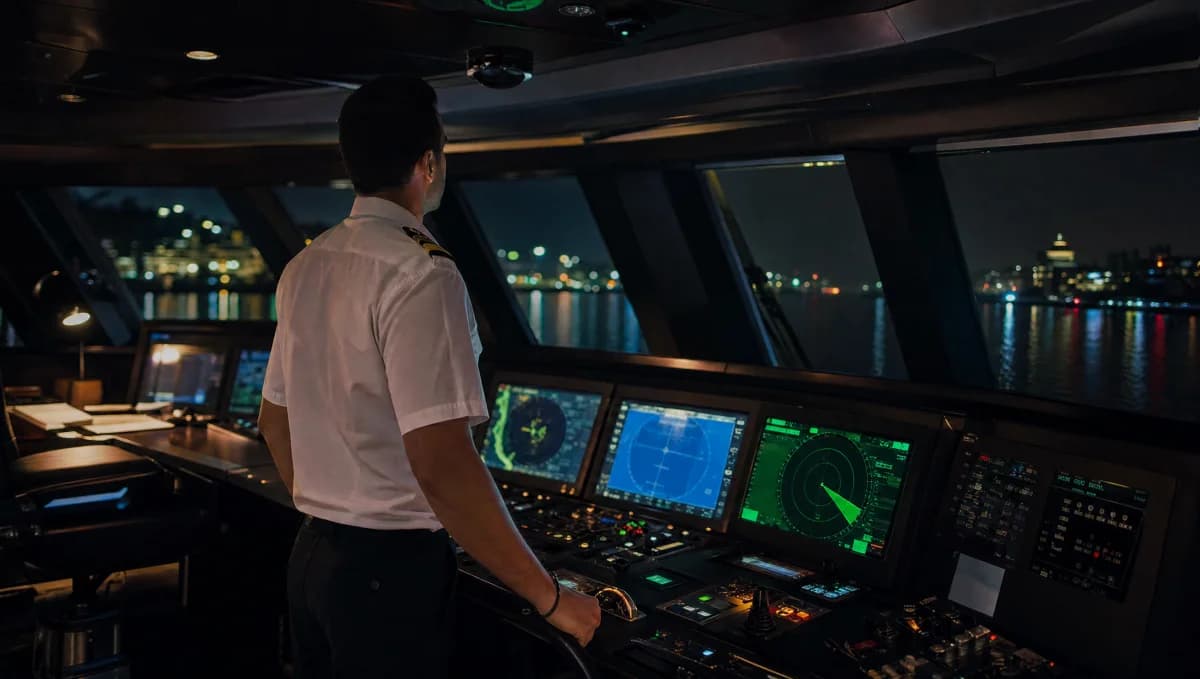
A collision at sea is rarely caused by not knowing the rules. It's caused by an officer of the watch who knew Rule 5 required a proper lookout, and stood one anyway with the radar range set too tight, the chartplotter brightness blinding night vision, and no second pair of eyes on deck. COLREGs violations on yachts are almost always procedural failures dressed up as rule-knowledge gaps.
This guide covers the specific COLREGs rules that govern watchkeeping and night navigation, how they translate into bridge procedure, and where they intersect with STCW rest-hour compliance and your Safety Management System.
This is written for captains, mates, and officers of the watch on private and commercial yachts. It assumes familiarity with the 1972 Convention on the International Regulations for Preventing Collisions at Sea and focuses on application rather than the full rule text.
Why Watchkeeping Rules Deserve Separate Attention
COLREGs is organized into six parts — General, Steering and Sailing, Lights and Shapes, Sound and Light Signals, Exemptions, and Verification of Compliance — across 41 rules. Most yacht crew training treats the Steering and Sailing rules (crossing, overtaking, give-way priority) as the core syllabus, and for day navigation in clear visibility that's largely correct.
Night watchkeeping is different. Visual cues that resolve ambiguity in daylight — a vessel's heading, her type, whether she's making way — disappear. Rule 5 (lookout), Rule 6 (safe speed), Rule 7 (risk of collision), and Rule 19 (restricted visibility) do most of the work, and they demand judgment rather than memorized right-of-way sequences.
The Four Rules That Govern Every Night Watch
Rule 5 — Lookout
Rule 5 requires every vessel to "maintain a proper look-out by sight and hearing as well as by all available means appropriate in the prevailing circumstances and conditions so as to make a full appraisal of the situation and of the risk of collision."
On a yacht bridge at night, this means two things in practice. First, radar and AIS are "available means" — not substitutes for the lookout. A contact with no AIS transponder (a fishing boat, an unlit tender, a small day-sailor) will never appear on your screen, and it's exactly the kind of contact a visual and aural watch is designed to catch. Second, "by hearing" is not decorative language — engine noise, air conditioning, and closed bridge doors materially degrade a watchkeeper's ability to hear fog signals or another vessel's engine, which matters directly under Rule 19.
Rule 6 — Safe Speed
Rule 6 requires proceeding "at a safe speed so that she can take proper and effective action to avoid collision and be stopped within a distance appropriate to the prevailing circumstances and conditions." Safe speed at night is not a fixed number — it's a function of visibility, traffic density, sea state, the vessel's maneuverability, and whether radar is being effectively used. A speed that's safe crossing open water at 2200 may not be safe approaching a fishing fleet's working grounds an hour later.
Rule 7 — Risk of Collision
Rule 7 requires using "all available means appropriate to the prevailing circumstances and conditions to determine if risk of collision exists," and states explicitly: "if there is any doubt such risk shall be deemed to exist." It also warns against making assumptions "on the basis of scanty information, especially scanty radar information" — a single stale radar return without a plotted trend tells you almost nothing about a target's course or speed.
Rule 7's "if in doubt, assume risk exists" standard is not a suggestion — it's the legal baseline a court or flag-state investigator will apply after the fact. A watchkeeper who waited for certainty before acting has already breached the rule, regardless of the outcome.
Rule 19 — Conduct in Restricted Visibility
Rule 19 governs vessels not in sight of one another in or near fog, heavy rain, or any condition of restricted visibility. It requires a safe speed adapted to those conditions and engines ready for immediate maneuver. Where a vessel detects another by radar alone and determines a close-quarters situation or risk of collision exists, she must take avoiding action in ample time — and, so far as possible, avoid altering course to port for a vessel forward of the beam (other than one being overtaken), or altering course toward a vessel abeam or abaft the beam. If a fog signal is heard forward of the beam, or a close-quarters situation with a vessel forward of the beam cannot be avoided, speed must be reduced to the minimum needed to maintain steerage — and way taken off entirely if necessary.
This is the rule most yacht watchkeepers under-apply. Night navigation in clear air is governed by Rules 11–18 (the crossing, overtaking, and give-way sequence for vessels in sight of one another). The moment visibility drops — squall, haze, heavy spray — Rule 19 governs your conduct toward any vessel you cannot see, detected only by radar or heard, with a materially more conservative standard; Rules 11–18 still apply to any vessel that comes into sight.
Stand-On Doesn't Mean Passive
Rule 17 governs the stand-on vessel's obligations once a give-way situation exists under the crossing or overtaking rules. The stand-on vessel should keep her course and speed — but she may take action to avoid collision as soon as it becomes apparent the give-way vessel isn't taking appropriate action. And if the situation reaches the point where collision cannot be avoided by the give-way vessel's action alone, the stand-on vessel is required to take whatever action will best help avoid collision.
At night, the gap between "give-way vessel should be acting by now" and "collision cannot be avoided by her action alone" closes fast. A watchkeeper who mechanically holds course and speed because "I'm the stand-on vessel" while a closing contact shows no sign of maneuvering is misreading Rule 17, not applying it correctly.
Night Anchoring Is a COLREGs Compliance Point, Not Just a Seamanship One
Anchor lights are one of the most commonly missed COLREGs requirements on yachts, precisely because anchoring feels like the end of active navigation rather than a continuation of it. Rule 30 sets specific, size-dependent requirements for anchor lights and shapes — we cover the full breakdown, including the difference between vessels under and over 50 meters, in our dedicated guide to COLREGs night anchoring for yachts. If your crew treats "dropped the hook, lights on" as a single unverified step in the anchoring checklist, that guide is worth a direct read before your next overnight stop.
Building a Watch Handover That Survives an Audit
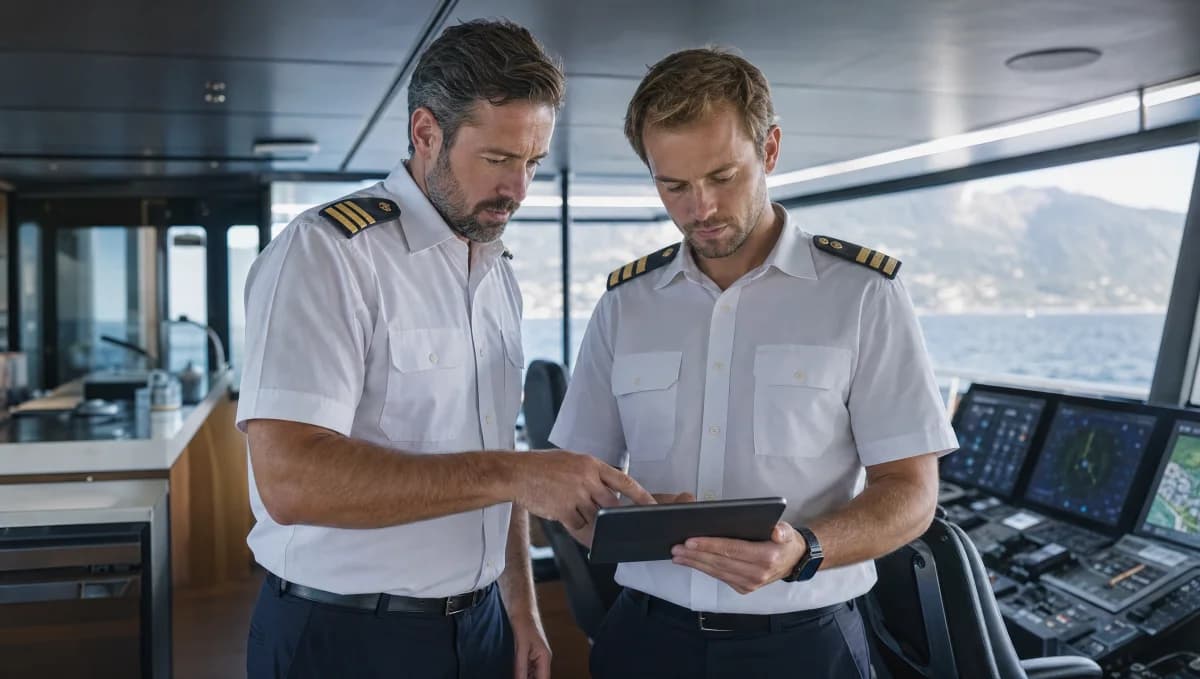
None of the rules above matter operationally unless the watch handover captures what the outgoing officer actually observed — traffic density, any contacts being monitored, visibility trend, and whether Rule 19 conditions were in effect at any point in the watch. A verbal handover that amounts to "all quiet, nothing to report" is functionally unauditable: if an incident is investigated afterward, or a Port State Control inspector asks to see watch records, there's nothing to show.
A defensible watch log records three things at minimum: contacts assessed as risk-of-collision under Rule 7 and the action taken, any period navigated under Rule 19 restricted-visibility conduct, and confirmation that anchor lights or navigation lights were checked at watch start. Ten seconds of logging per watch change is cheap insurance against a six-month PSC or insurance dispute.
This is also where COLREGs compliance meets your Safety Management System rather than sitting apart from it. A yacht operating under ISM Code requirements needs watchkeeping procedures documented, followed, and evidenced as part of the SMS — our ISM Code compliance guide covers how to structure that documentation so it holds up under DOC and SMC survey.
Where COLREGs Watchkeeping Meets STCW Rest Hours
A tired officer of the watch is a Rule 5 failure waiting to happen — lookout quality degrades with fatigue well before a watchkeeper would describe themselves as impaired. This is why STCW rest-hour compliance isn't a separate HR concern from COLREGs discipline; it's a precondition for it. The STCW 2010 Manila Amendments set a minimum of 10 hours rest in any 24-hour period and 77 hours in any 7-day period for watchkeeping personnel, with records required in the prescribed format and available to Port State Control on request. Our STCW rest hours for yacht crew reference covers the exact thresholds, and the broader crew welfare picture — including how rest hours interact with MLC 2006 obligations — is in our MLC 2006 yacht crew guide.
If your watch schedule is drawn up by feel rather than checked against the STCW thresholds, run it through our STCW rest hours checker before the season starts, not after a PSC inspector flags it.
A Practical Night Watch Checklist
Before handing over or starting a night watch, an officer should be able to confirm each of the following without hesitation:
- Lookout coverage — is a dedicated lookout posted, or is the OOW alone relying on radar/AIS as the sole means of detection?
- Radar and AIS cross-check — are all radar contacts cross-referenced against AIS, and is the gap between them (unlit or non-transmitting vessels) understood as a live risk?
- Safe speed reassessment — has speed been reassessed against current visibility, traffic, and sea state, not just set once at watch start?
- Restricted visibility trigger — is there a clear, pre-briefed threshold at which the watch starts applying Rule 19 conduct to vessels not in sight?
- Anchor and navigation lights — verified operational and correctly configured for vessel size, not assumed from the previous watch?
- Rest-hour status — is the outgoing and incoming watchkeeper within STCW rest-hour compliance, and is that logged?
None of this replaces training or judgment. It's a floor, not a ceiling — but it's the floor most watchkeeping failures fall through.
Frequently Asked Questions
The Bottom Line
COLREGs watchkeeping compliance at night is less about memorizing rule numbers and more about building bridge habits that hold up when visibility, traffic, or fatigue removes your margin for error. Rules 5, 6, 7, 17, and 19 give you the legal and operational framework; a documented watch handover, a rest-hour system your crew actually follows, and an SMS that captures what happened — not just what should have happened — turn that framework into something you can prove.
For the full official text of the Convention, the IMO maintains the COLREG Convention page as the authoritative source.
This guide is intended for informational purposes and reflects the 1972 COLREGs Convention as amended. It is not a substitute for the official rule text, flag-state guidance, or your vessel's Safety Management System. Consult the IMO and your flag administration for authoritative requirements.