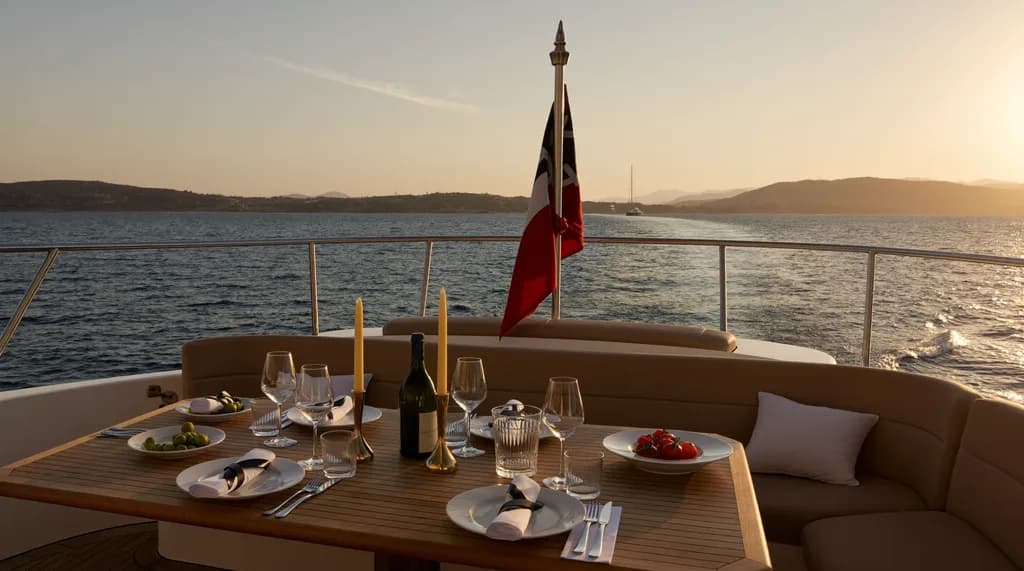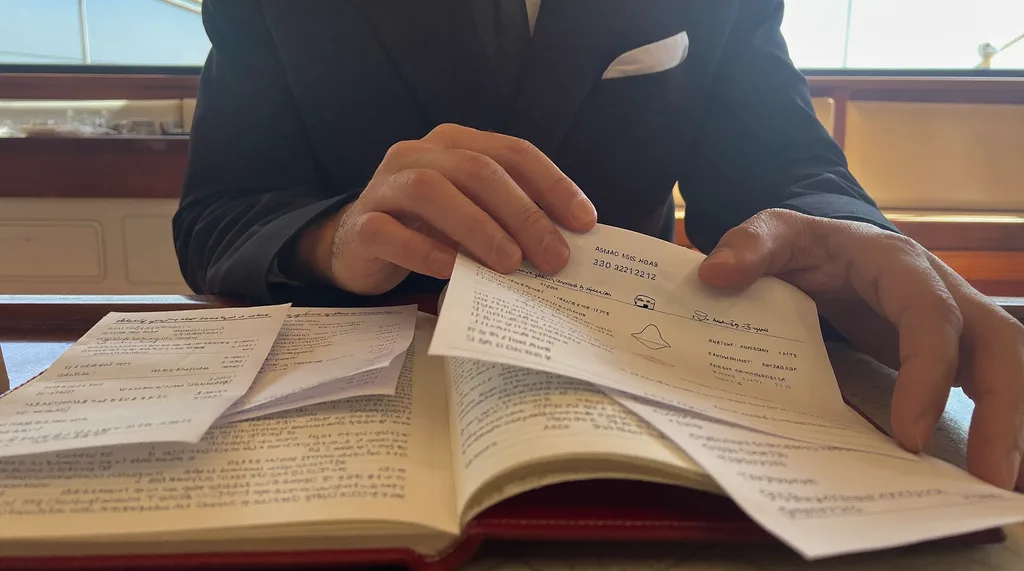
The economics of charter yacht management are simple in principle: keep the vessel booked, keep it in condition, keep the clients returning. The operational reality is considerably more complex.
Between a Saturday departure and a Monday arrival, a 20-metre gulet needs to be cleaned to hotel standard, reprovisioned, refuelled, technically inspected, and ready for the next group — often with a crew that has been working for seven consecutive days. Documentation needs to be current. The captain needs to be rested. And the next charter party's dietary preferences, arrival time and itinerary requests are already in the booking system.
This is what charter yacht management actually looks like. This guide covers how professional operators handle it — and where digital systems make the difference between a profitable fleet and a permanent firefight.
The Charter Operation Cycle
Every charter booking runs through the same operational cycle. Understanding each phase is the foundation of managing it systematically.
Phase 1: Pre-Charter Preparation
Preparation begins before the client boards. Technical systems must be confirmed operational — not discovered to be faulty when the charter party is standing on the dock. The pre-charter check covers: engine start and systems test, navigation electronics, safety equipment, all onboard appliances, and documentation review.
Provisioning is coordinated based on the charter brief: dietary requirements, beverage preferences, special occasions. For a gulet carrying eight guests for seven days, the provisioning list is long. Errors that seem minor — a forgotten dietary restriction, a missing snorkelling mask — disproportionately affect client satisfaction.
Crew briefing covers the charter party profile, itinerary, and any specific requests from the booking. The captain ensures all crew have reviewed the client brief before arrival.
Phase 2: Active Charter
During the charter itself, the captain and crew manage the guest experience while simultaneously maintaining operational records: fuel consumption by leg, maintenance observations, any incidents or near-misses, and guest feedback. These records matter — not just for the current charter but for future planning and compliance purposes.
Expense logging during active charter is particularly prone to gaps. Shore excursions, market provisions, port fees paid in cash, and emergency equipment purchases are all real operating costs that disappear without a system to capture them at point of occurrence.
Undocumented charter expenses are not just an accounting problem. For VAT-registered charter operators, missing receipts represent real tax exposure. For vessels subject to management company oversight, unrecorded costs erode the owner's confidence in reported financials.
Phase 3: Turnaround
The turnaround window — typically 4–8 hours between client departure and the next embarkation — is the highest-pressure operational period in charter management. The quality of this window determines the condition in which the next charter group boards.
A professional turnaround follows a fixed sequence: disembarkation and farewell, immediate inventory check against the pre-charter record, full vessel cleaning, linen and galley restock, technical inspection and fuel, and documentation preparation.
The most common failure mode is not insufficient time — it is insufficient system. Without a structured checklist with sign-off requirements, items get missed. The bilge pump that worked fine last week was not checked this turnaround. The fire extinguisher in the aft cabin has moved. These are not catastrophic failures individually; cumulatively, they represent the difference between a professionally operated vessel and an average one.
Photograph key areas — saloon, galley, cabins, deck — at the start of each charter as standard practice, not just when damage is expected. This documentation protects the operator in the event of disputed damage claims.
Phase 4: End-of-Charter Review
After the client departs, a brief structured review captures what worked and what needs attention before the next booking: maintenance items observed during the charter, client feedback summary, any consumable stock running low, and documentation to be updated. This 30-minute review prevents small issues from compounding across successive charters.
Crew Management in Charter Operations
Charter fleet crew management has different requirements from private yacht operations. Crew rotate more frequently, overlap between vessels is common, and last-minute coverage needs arise regularly. Managing this manually — via phone calls and WhatsApp threads — consistently produces gaps.
Certification Currency Across the Fleet
Every crew member assigned to a charter vessel needs current documentation. In Turkey, this means STCW Basic Safety Training for all crew, certificates of competency for officers and captain, and valid seafarer medical certificates (ENG1 is the UK version). The challenge in fleet operations is not knowing the requirements — it is tracking which crew member's which certificate expires when, across six or eight individuals who may move between vessels.
A central crew register with expiry date tracking and automated alerts is not an administrative nicety in fleet operations — it is an operational necessity. A crew member whose STCW revalidation is missed cannot be deployed. Discovering this on the morning of a charter departure is a preventable crisis.
Crew Scheduling Across Multiple Vessels
For operators running three or more vessels simultaneously, crew scheduling requires visibility across the full fleet programme. When charter dates overlap, when crew leave periods fall, when illness requires last-minute substitution — these decisions need to be made with real-time information about availability and certification status.
A spreadsheet per vessel is not a fleet scheduling system. It is the absence of one.
Financial Management for Charter Operators
Charter operation financials are more complex than private yacht management. Revenue — charter fees — must be tracked against operating costs to produce per-charter and per-season profitability analysis. Most charter operators don't have this visibility. They know approximately whether the season was profitable; they don't know which charters were profitable and which weren't.
Per-Charter Cost Tracking
Tracking costs at the individual charter level reveals operational patterns that aggregate reporting obscures: Does the August peak create disproportionate maintenance costs? Are shorter charters more or less profitable per day than week-long bookings? Is one vessel in the fleet running consistently higher fuel costs than expected?
These questions are answerable when costs are logged against charter references. They're unanswerable when expenses are recorded in a flat monthly spreadsheet.
Owner Reporting for Managed Vessels
Many charter vessels operate under management agreements — the owner receives a percentage of charter revenue minus documented operating costs. The management company's credibility with the owner depends entirely on the quality of financial reporting: clear categorisation, attached receipts, and period-on-period comparability.
Management operators running on manual systems frequently find that report preparation consumes a disproportionate share of their time — time that should be spent on fleet operations and client relationships.
Compliance in Commercial Charter Operations
Charter vessels face a higher compliance burden than private yachts, and the consequences of non-compliance are more immediate — an uninspected vessel can be pulled from service during peak season.
Turkish Charter Licensing
Commercial charter operation in Turkey is certified under the Deniz Turizmi Yönetmeliği (Marine Tourism Regulation): the operator obtains a tourism operation certificate (turizm işletmesi belgesi) from the Ministry of Culture and Tourism, applied for through the provincial culture and tourism directorates. The certificate is issued after an inspection of the vessel's type, capacity, physical features, and staff qualifications. Certificate changes and associated documentation must be tracked as carefully as crew certifications.
Port State Control Attention
Commercially operated vessels receive more inspection attention than private yachts. Port state control regimes such as the Paris MoU inspect foreign-flagged ships in their member states' ports; Türkiye is not a Paris MoU member, so a vessel working Turkish waters deals with Turkish authorities. In the Paris MoU's 2024 annual report, fire safety (SOLAS chapter II-2) was the largest deficiency category, at 17.2% of recorded deficiencies. Fire safety, life-saving appliances, and crew documentation are all preventable with systematic tracking.
Insurance for Charter Operations
Charter use typically requires specific endorsements on hull and machinery policies — a private vessel policy does not extend to commercial charter income without explicit charter use cover. P&I insurance for charter operations needs to cover passenger liability. These distinctions matter at claim time, not before.
Operating a charter without the appropriate insurance endorsements can void coverage for the entire voyage. This is not a compliance technicality — it is the difference between a recoverable incident and a catastrophic financial event for the operator.
Turkey's Charter Market: Operational Context
Turkey's blue voyage market — gulet charters along the Aegean and Mediterranean coast — has operated for decades, but the operational infrastructure supporting it has not kept pace with international standards. The charter market in Croatia or Greece increasingly expects digital booking systems, standardised documentation, and professional vessel management reports. Turkish operators competing internationally need to match that standard.
The domestic market is also evolving. Turkish charter clients — particularly the premium segment operating from Istanbul and the major coastal cities — are increasingly comparing their experience to international benchmarks. Vessel condition, documentation professionalism, and the quality of captain-client communication all factor into repeat bookings and referrals.
The operators moving to digital management systems are not doing so for compliance reasons alone. They are doing it because the operational efficiency gains — time recovered from administration, costs identified and reduced, crew availability managed systematically — directly improve profitability.
What a Charter Management Platform Should Do
Evaluated against the operational realities of charter fleet management, a platform needs to cover:
Maintenance and technical: Pre-charter checklists, fault logging, scheduled maintenance with alerts, turnaround inspection records with photo documentation.
Crew management: Centralised certification register with expiry alerts, schedule visibility across multiple vessels, document storage and access.
Financial tracking: Per-charter expense logging, category-level reporting, receipt capture, owner management reports.
Compliance: Licence and certificate tracking, port authority documentation, insurance renewal alerts.
Multi-vessel visibility: Fleet dashboard showing status across all vessels simultaneously — not vessel-by-vessel navigation.
A system that covers all five areas in a single platform, accessible offline, and usable by captain and crew on mobile — that is the operational standard professional charter management requires.
Frequently Asked Questions
Charter Management Is an Operational Discipline
The difference between a charter operation that grows and one that stagnates is rarely the vessels or the market. It is the systems behind the operation: how turnarounds are managed, how crew is scheduled, how costs are tracked, how owners are reported to.
Digital tools do not solve operational problems — good operators solve operational problems. What digital tools do is remove the administrative friction that prevents good operators from focusing on what actually matters: vessel condition, guest experience, and fleet profitability.
HelmOps is yacht charter management software built for exactly this operational context: switching between vessels from one account, crew document tracking with expiry alerts, per-charter expense logging, and one-click owner reporting. Expense and trip logging work offline, in Turkish and English, priced for the Mediterranean market. Start your 30-day free trial — no credit card required.
What changed (7 Sep 2026): Removed or marked unsupported numeric claims and replaced them with sourceable, vessel-specific guidance.